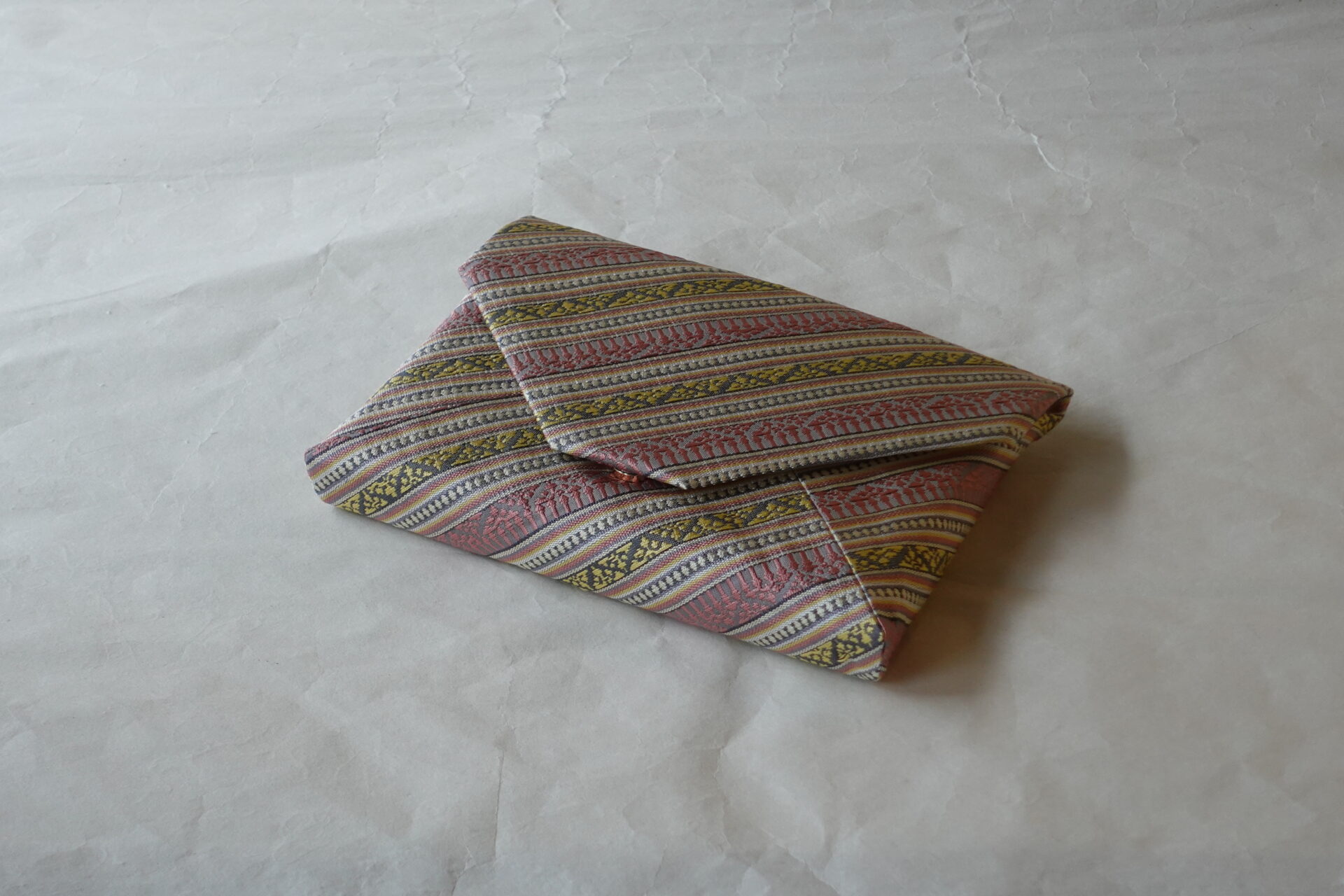
横幅 21.5cm × 縦 16cm × 厚さ 3.5cm
正絹 西陣織
Made in Japan — Nishijin-ori
Pure silk (shōken) Sukiya-bukuro
Sagara Dan-ori
This is an introduction to a Japanese-made Sukiya-bukuro crafted from pure silk (shōken) Nishijin-ori.
A sukiya-bukuro is a type of pouch used in the tea ceremony to carry items such as a fukusa (silk cloth), folding fan, toothpicks, kaishi paper, and shino-bukuro.
It is similar to a handbag carried with traditional Japanese attire, so it can be used not only for tea ceremony occasions but also when going out in kimono.
Sagara Dan-ori refers to a luxurious textile in which the embroidery technique known as Sagara (also called “tama-nui” or knotted embroidery), originally from China, has been adapted into weaving. Using colored threads, three-dimensional striped patterns are woven into the fabric.
By pulling threads out from the back of the fabric to form small knots and connecting them continuously, this technique creates a distinctive texture with depth and luster, resulting in a rich, ornate, and exotically inspired appearance.
The name “Sagara Dan-ori” is said to derive from the Sagara clan, who were the lords of Hitoyoshi Castle in Higo Province (present-day Kumamoto Prefecture), though the details remain unclear.
This famed textile, long cherished by tea practitioners, conveys a profound sense of history.
Dimensions:
Width 21.5 cm × Height 16 cm × Thickness 3.5 cm
Material:
Pure silk
Nishijin-ori (Kyoto weaving tradition)
日本制 西阵织 正绢(真丝)
数寄屋袋 相良段织
这是日本制西阵织正绢(真丝)数寄屋袋的介绍。
所谓“数寄屋袋”,是茶道中用于携带帛纱、折扇、牙签、怀纸、志野袋等茶道小物的袋类器物。
其用途类似于和装时携带的手提包,因此不仅可在茶道场合使用,在身着和服外出时亦可使用。
“相良段织”是将源自中国的刺绣技法——相良刺绣(又称玉结绣)的技法应用于织物之中,
以彩色丝线织出具有立体层次感的段状纹样,是一种高级织锦面料。
该技法从布料背面拉出丝线,制作成一个个结状“玉结”,
并将其连续排列,从而形成独特的凹凸质感、光泽感,
营造出华丽且富有异国情调的风貌。
“相良段织”这一名称,据说源自肥后国(今熊本县)人吉城城主相良氏,
但其详细由来尚不明确。
这款深受茶人喜爱的名物裂,令人感受到厚重的历史韵味。
尺寸:
横宽 21.5 厘米 × 纵高 16 厘米 × 厚度 3.5 厘米
材质:正绢(真丝)
织造:西阵织