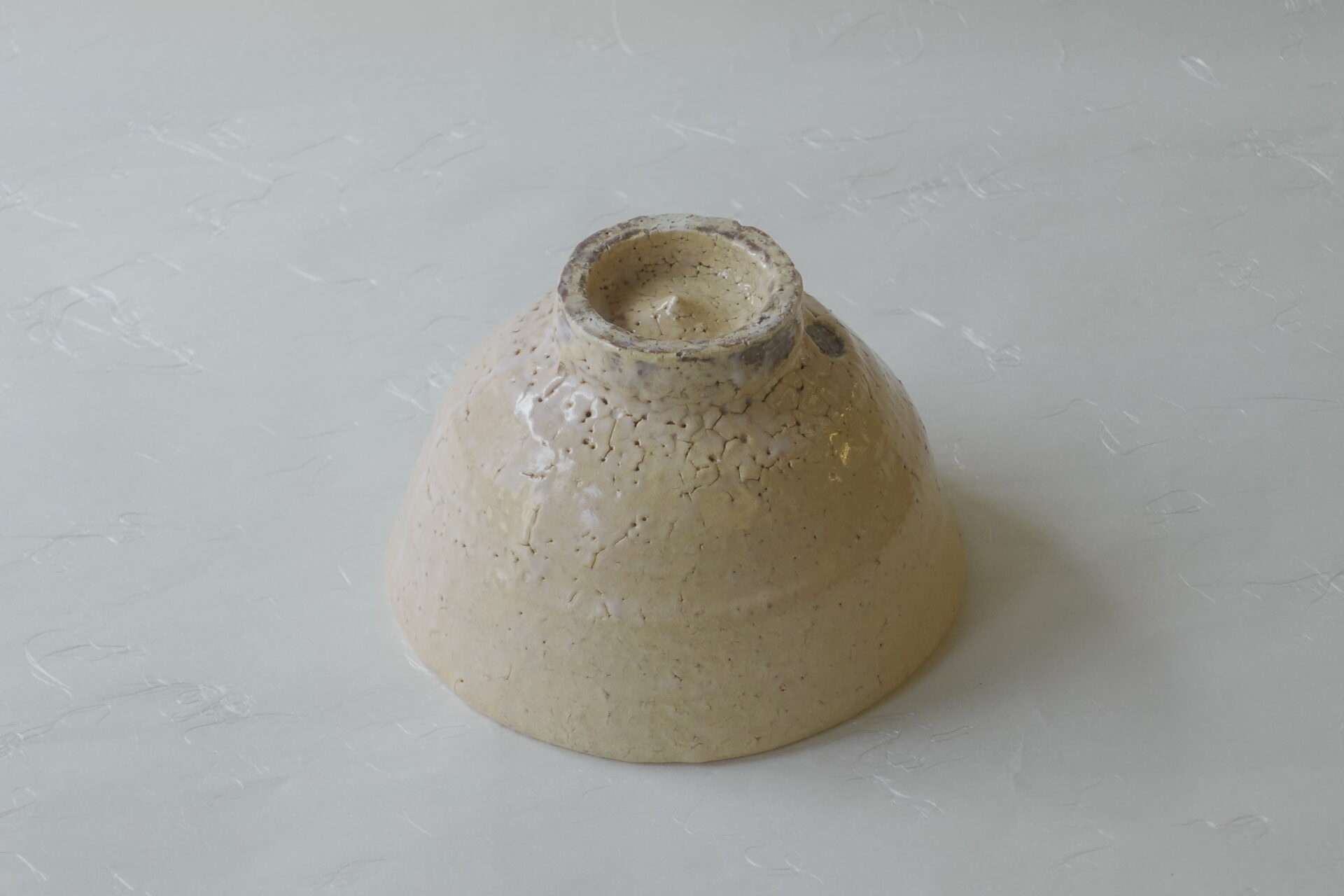
口径 14.3cm 高さ 9cm
Hagi Ware – Ido Tea Bowl by Komatsu Yushin
Biwa Glaze, Kairagi Texture
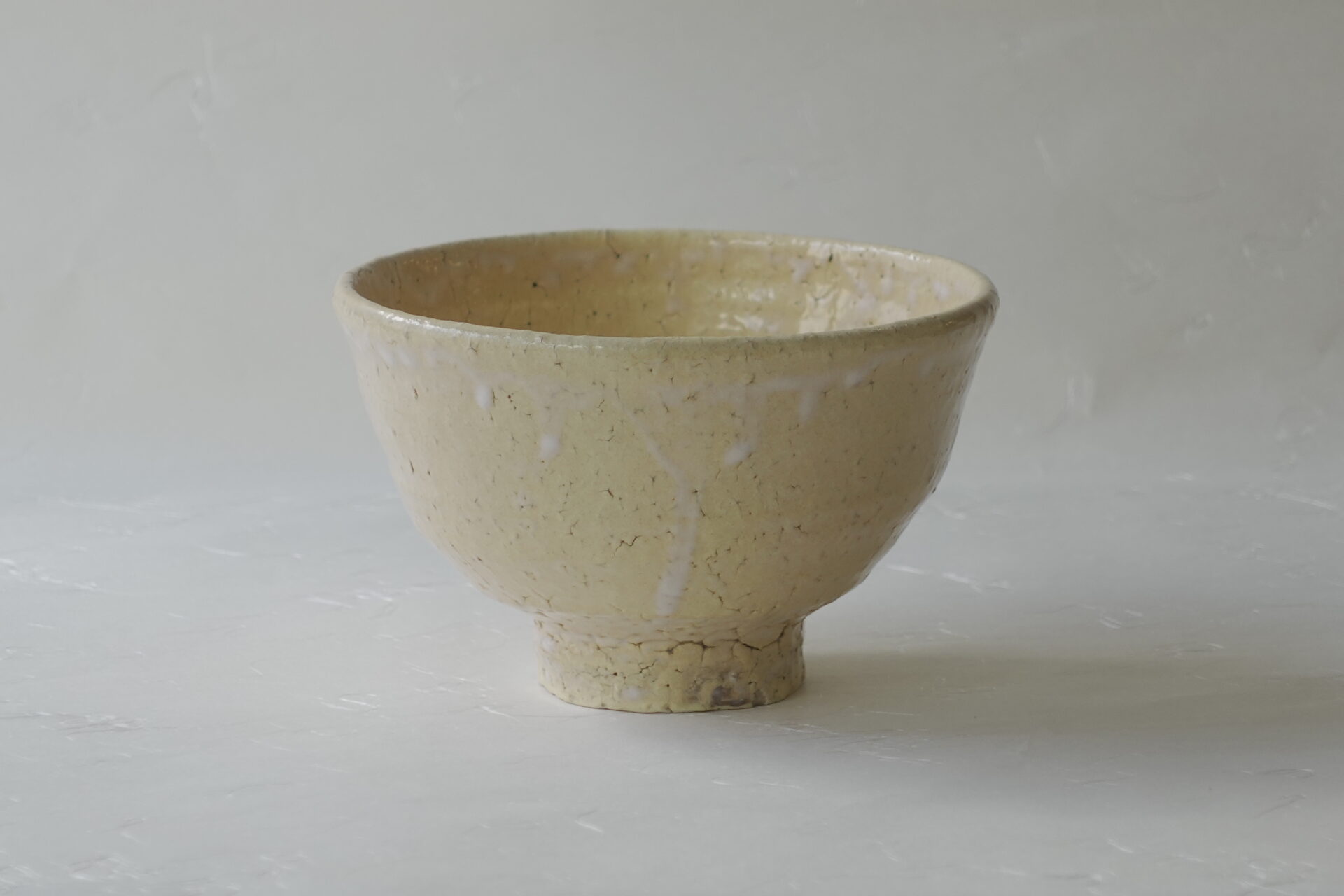
We are pleased to introduce this Ido tea bowl by Komatsu Yushin from Hagi ware.
The Ido tea bowl originally belongs to a type of Korean tea bowl and is believed to have been made during the relatively early period of the Yi (Joseon) Dynasty. Among the Korean tea bowls that were brought to Japan after the Muromachi period, it has been placed in the highest rank and is regarded as the king of Karamono (Chinese-style) tea bowls.
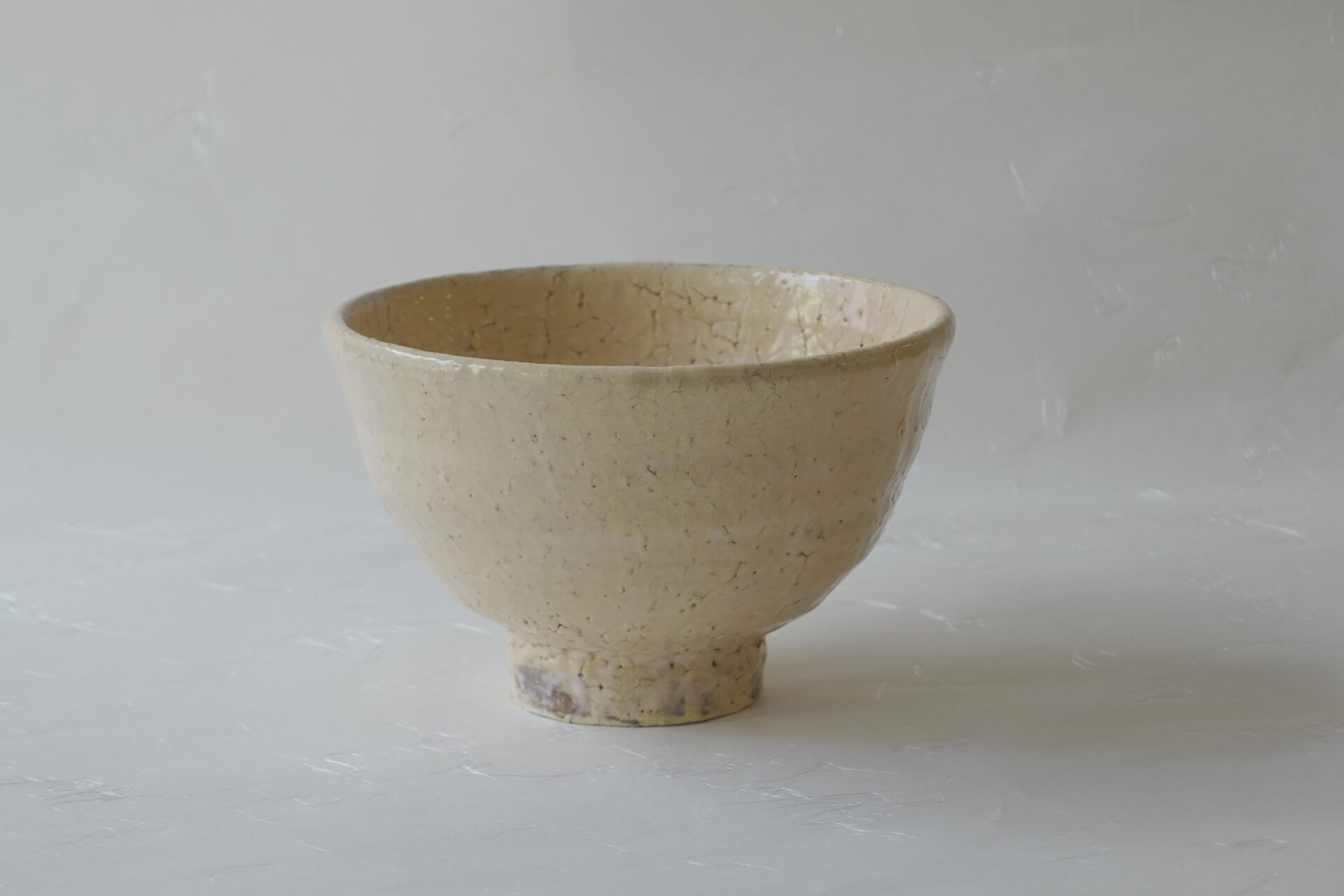
A characteristic of the Ido tea bowl is its coarse clay, rich in iron content, which has a reddish-brown color. Because this coarse clay is thrown on a fast-spinning wheel, rib-like wheel marks often stand out prominently on the surface.
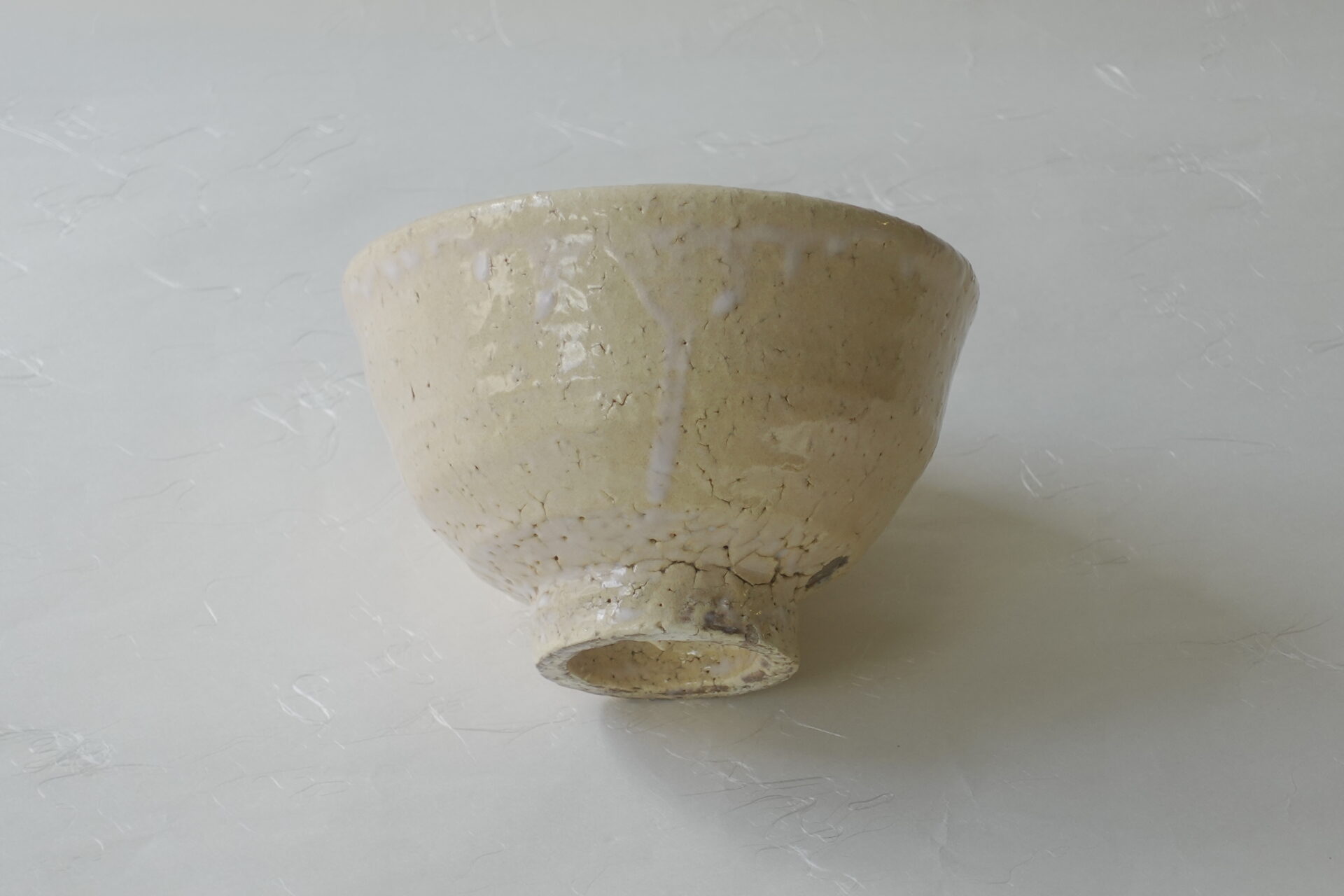
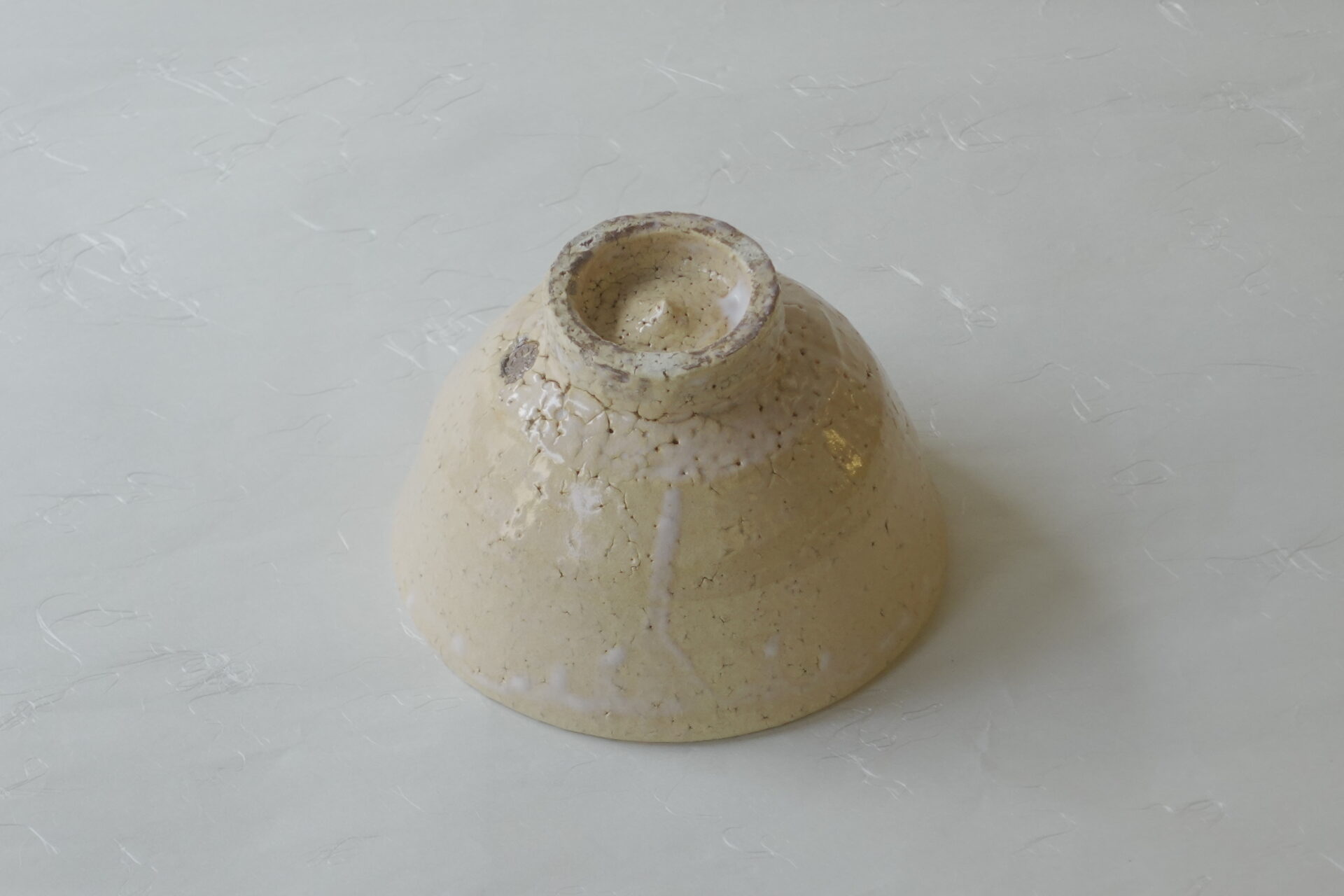
The foot is known as a “bamboo-joint foot” (take-no-fushi kodai), said to have originated from the practical need to grip the bowl easily when applying the glaze. This example features a carved foot; since the trimming tool enters at an angle when hollowing out the inside of the foot, the center within the foot rises in a spiral-like form—one of its distinctive traits.
The glazing is applied in a full coating, including the inside of the foot (so-called “zubugake” overall glazing), leaving very little of the bare clay of the foot visible. This is considered one of the established conventions of an Ido tea bowl.
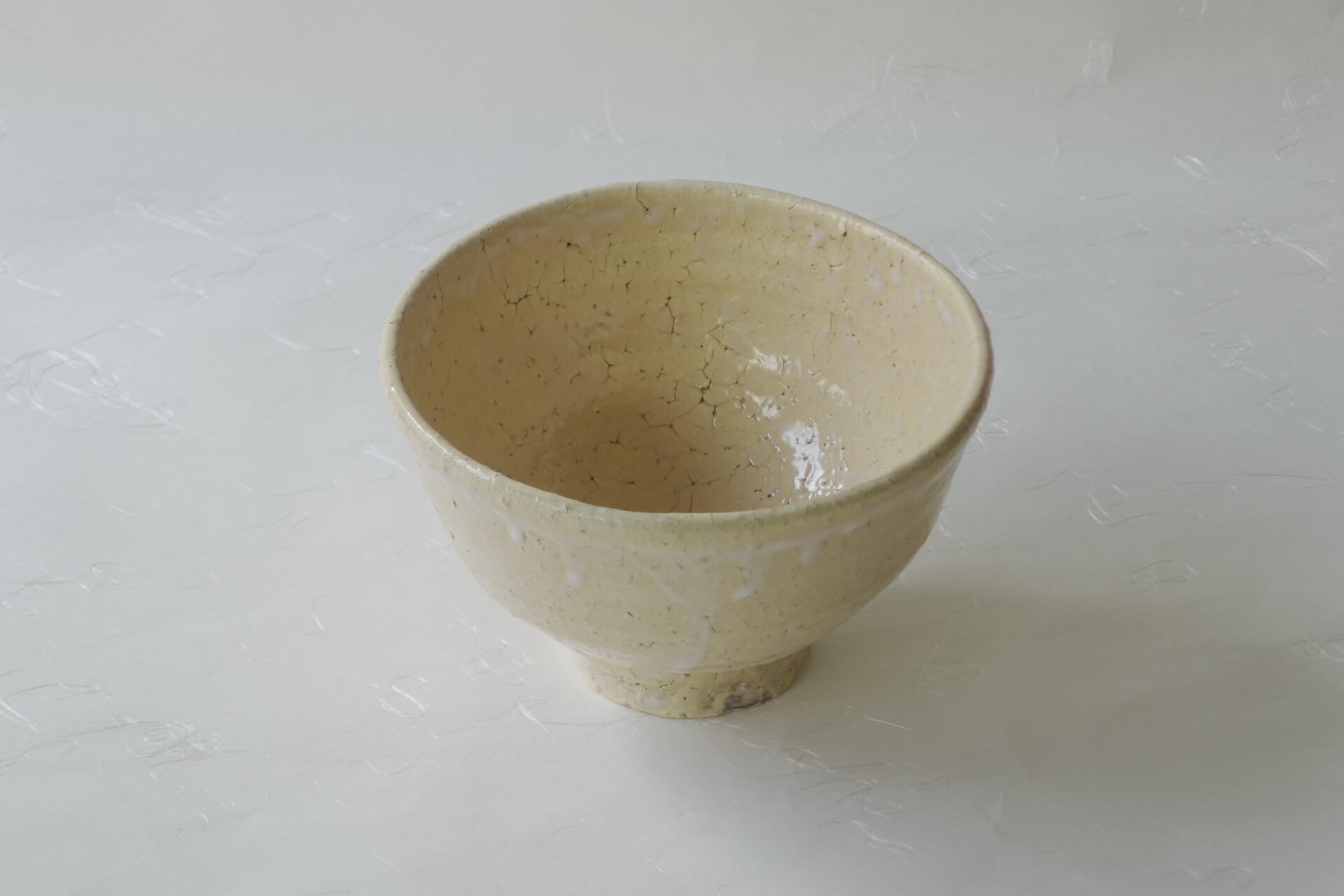
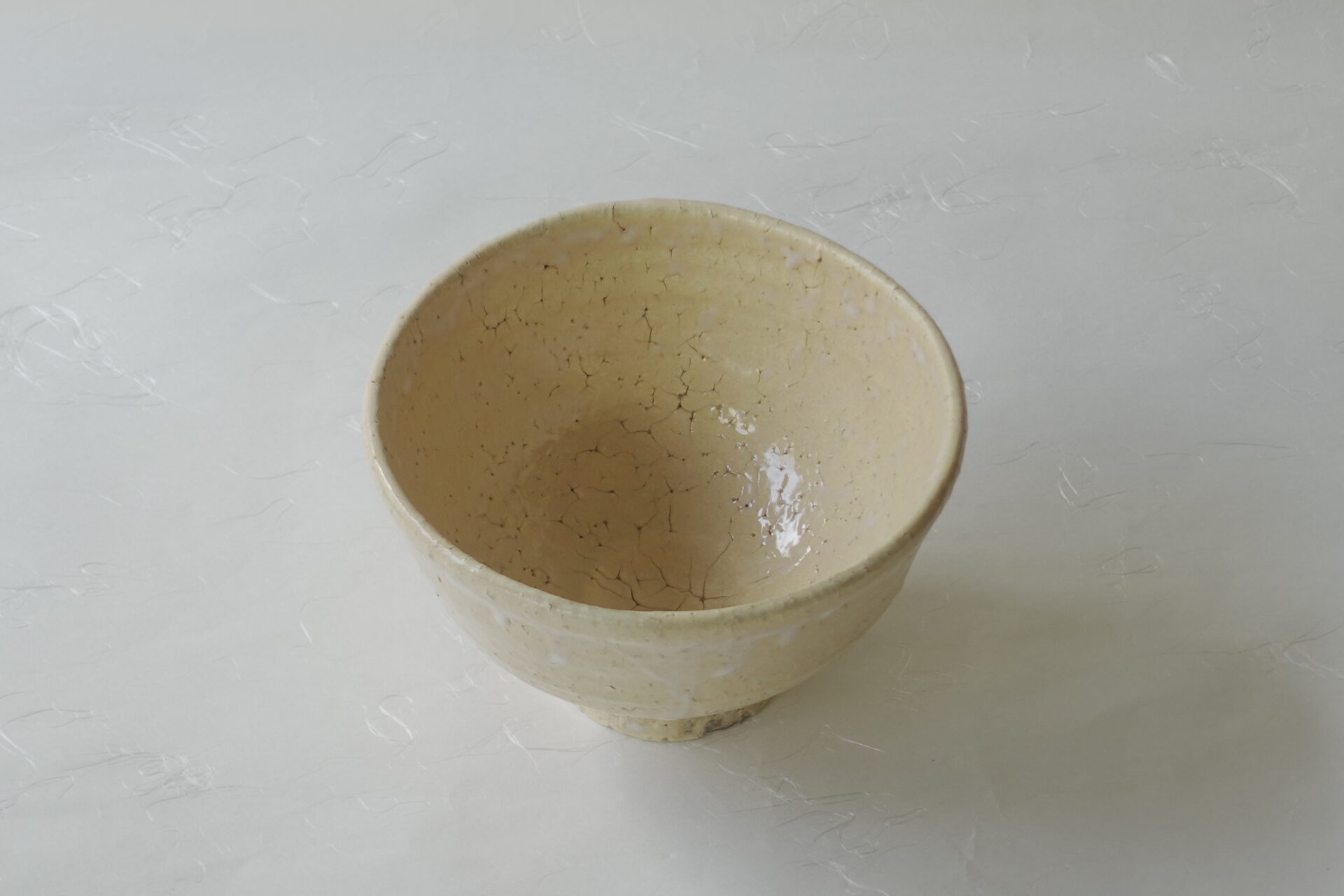
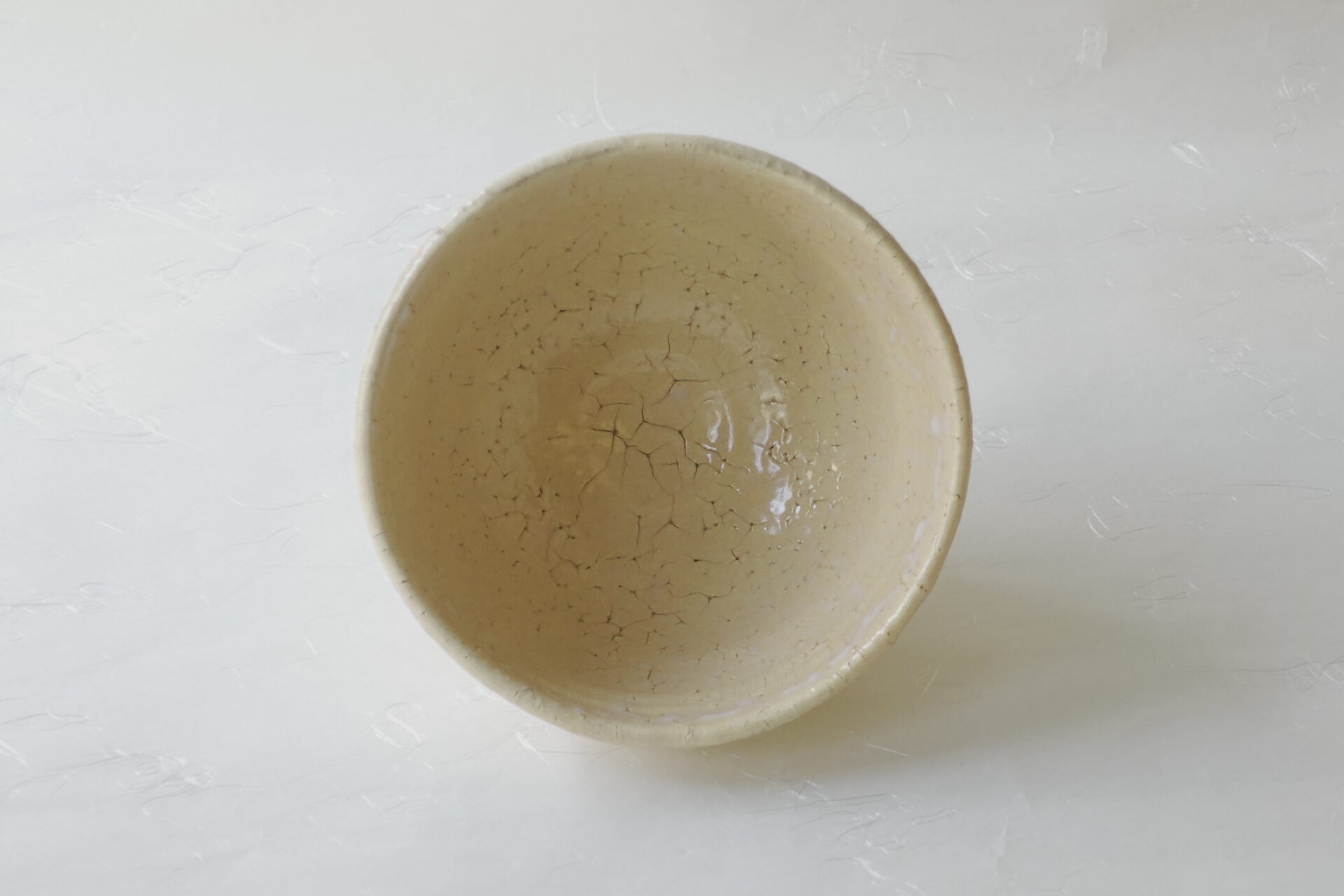
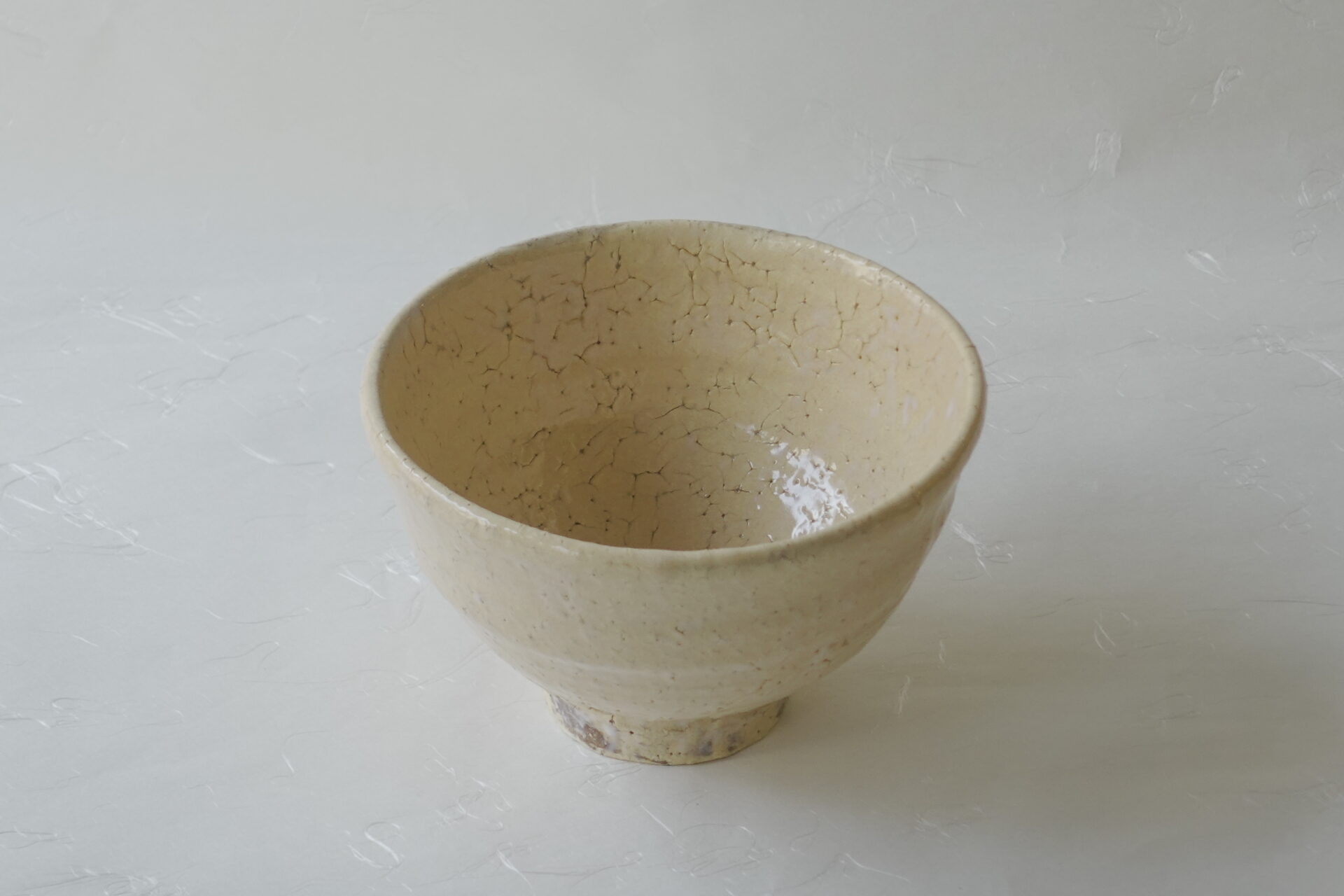
The entire piece is finished in a loquat (biwa) tone, giving it a soft and gentle appearance. The surface is covered throughout with what is called “kairagi,” a texture created by the shrinkage of the glaze. The cracks are irregular, varying in shape, size, and length, producing a powerful and dynamic impression.
There are numerous crazing lines and pinholes, conveying the rustic character distinctive to Hagi ware. In places, white glaze has been applied, and the drips and flow of the glaze create points of visual interest.
The surface glaze has a subtle sheen, exuding a calm and refined atmosphere. The bowl is generously sized, solid, and weighty, with an impressive presence.
While it possesses the rich, mellow depth characteristic of Hagi ware, it also gives a bright overall impression. This is a superb piece that can be enjoyed for many years, especially as you appreciate the “Seven Transformations of Hagi” that develop beautifully with use.
Diameter: 14.3 cm
Height: 9 cm
萩烧 小松结心 作 枇杷釉 梅花皮(かいらぎ) 井户茶碗
现为您介绍来自萩烧、小松结心所作的井户茶碗。
井户茶碗原本是朝鲜茶碗的一种,被认为是朝鲜李朝时期较早阶段制作的器物。在室町时代以后传入日本的朝鲜茶碗之中,被置于第一等级的地位,被誉为唐物茶碗之王。
井户茶碗的特点之一是胎土含铁量高,质地粗犷,呈红褐色。由于以较快的拉坯速度在陶轮上成形,因此器表常可见肋骨状明显的旋轮纹。
高台被称为“竹节高台”,据说是在施釉时为了便于手持茶碗而形成的结构。这种高台为削出式高台,由于修整高台内部的刀具以斜向切入,因此高台内中央呈现出仿佛漩涡般隆起的特征。
施釉方式为“总釉挂”,连高台内侧也完全浸釉覆盖,因此几乎看不到高台胎土直接裸露的部分。这也是井户茶碗的一个约定特征。
整器呈现枇杷色调,质感柔和温润。整体施以被称为“梅花皮(かいらぎ)”的釉面效果,釉药收缩形成的裂纹不规则分布,其形状、大小与长度各异,营造出强烈而有力的气息。
同时可见大量开片与针孔,展现出萩烧特有的粗犷之美。局部点施白釉,釉药的垂流与流动变化亦为观赏重点。
表面釉层富有光泽,散发出柔和温雅的氛围。器形硕大厚重,稳重端庄,充满存在感。
在拥有萩烧特有醇厚深邃韵味的同时,又带有明亮的印象。可在长期使用中欣赏“萩之七变化”的妙趣,是一件可长久珍用的佳品。
口径:14.3cm
高度:9cm
