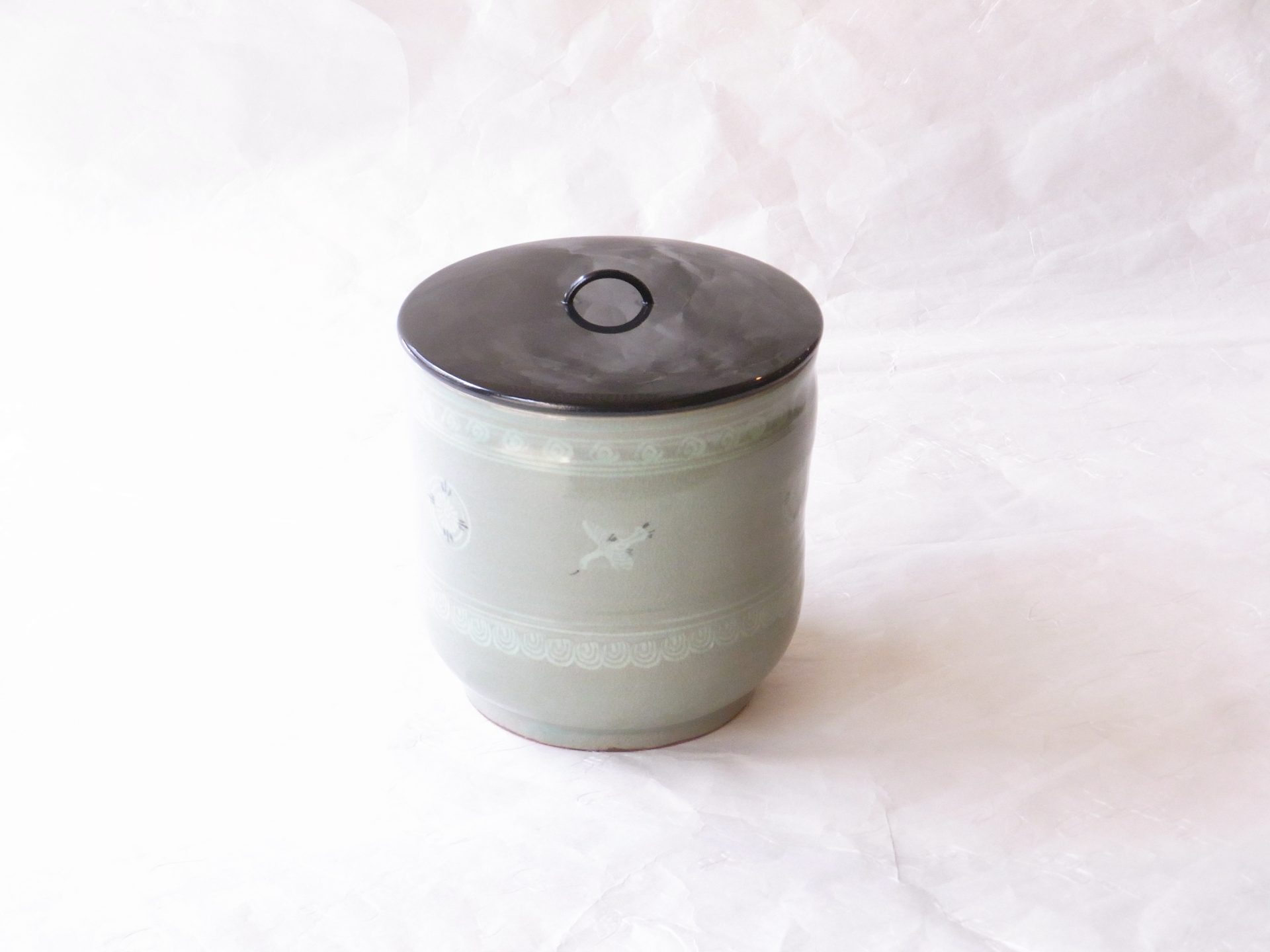
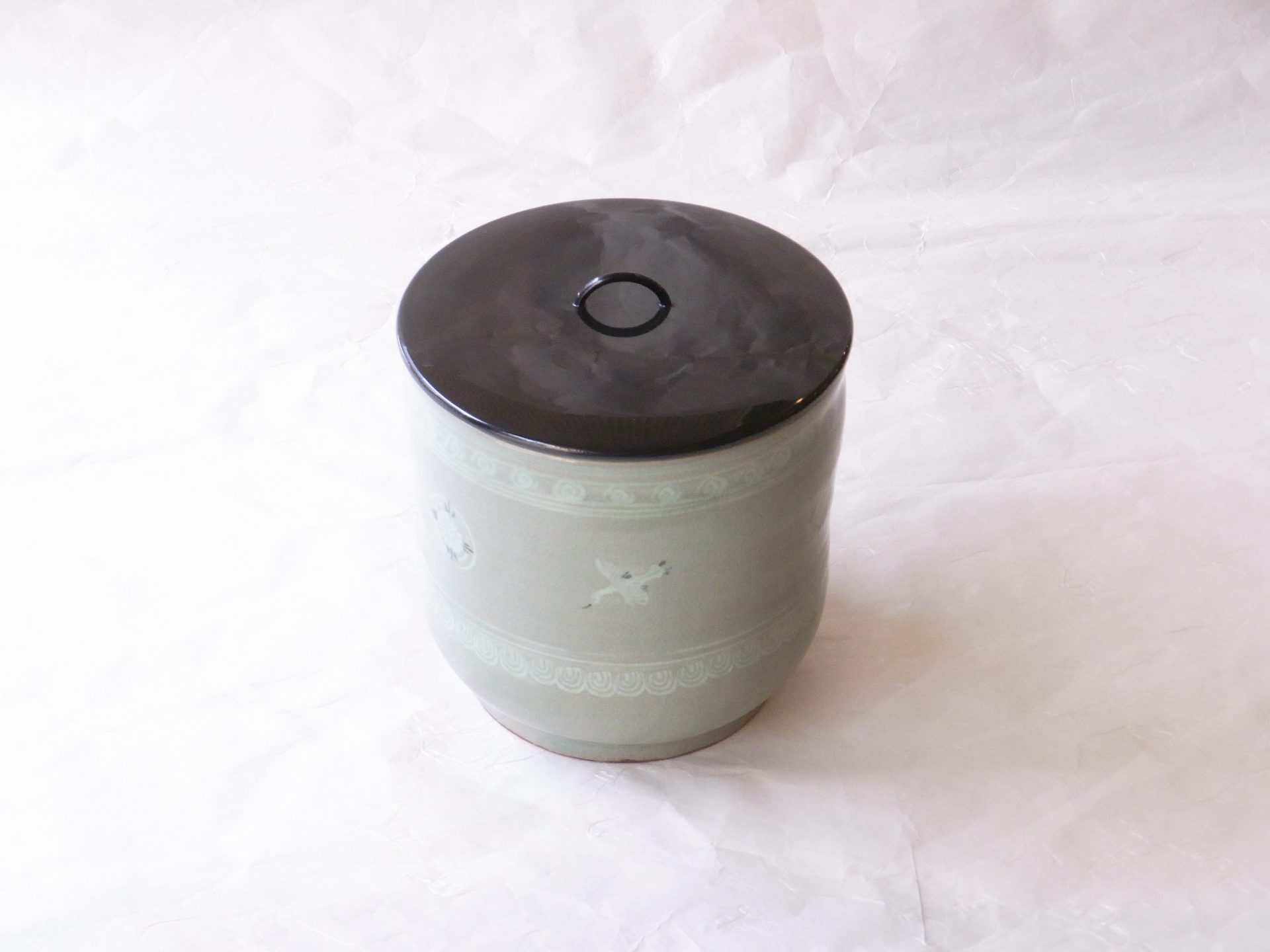
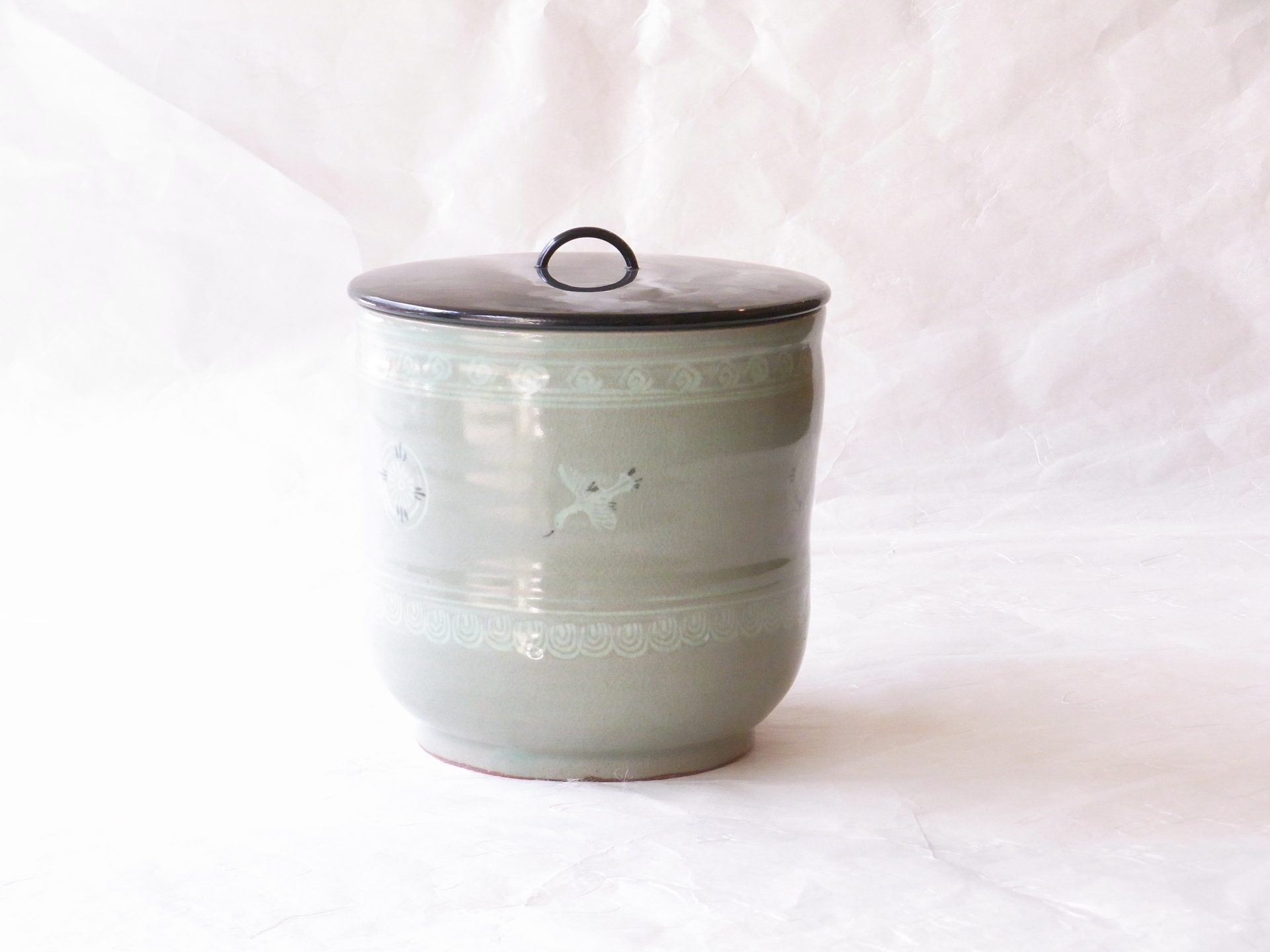
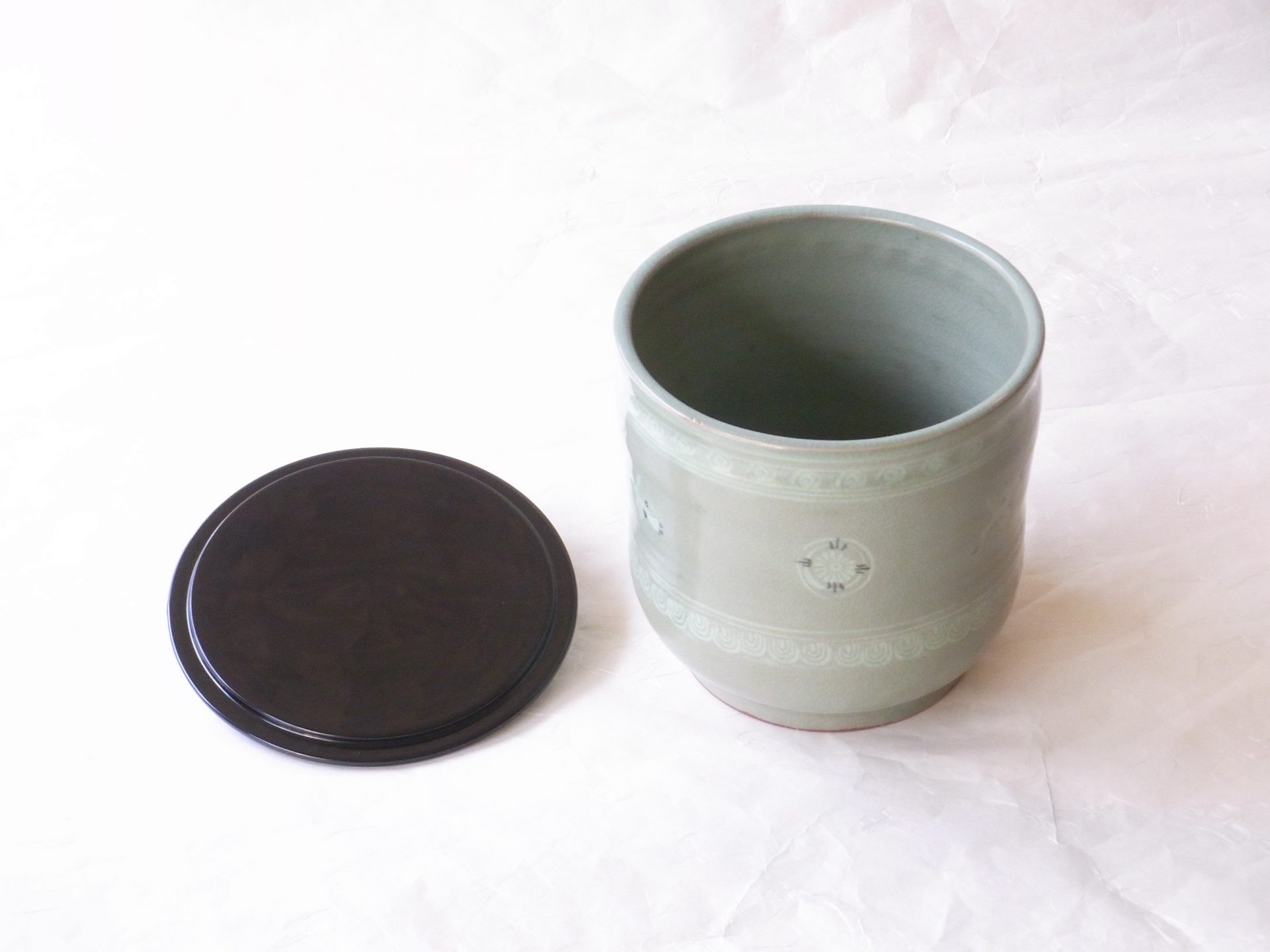
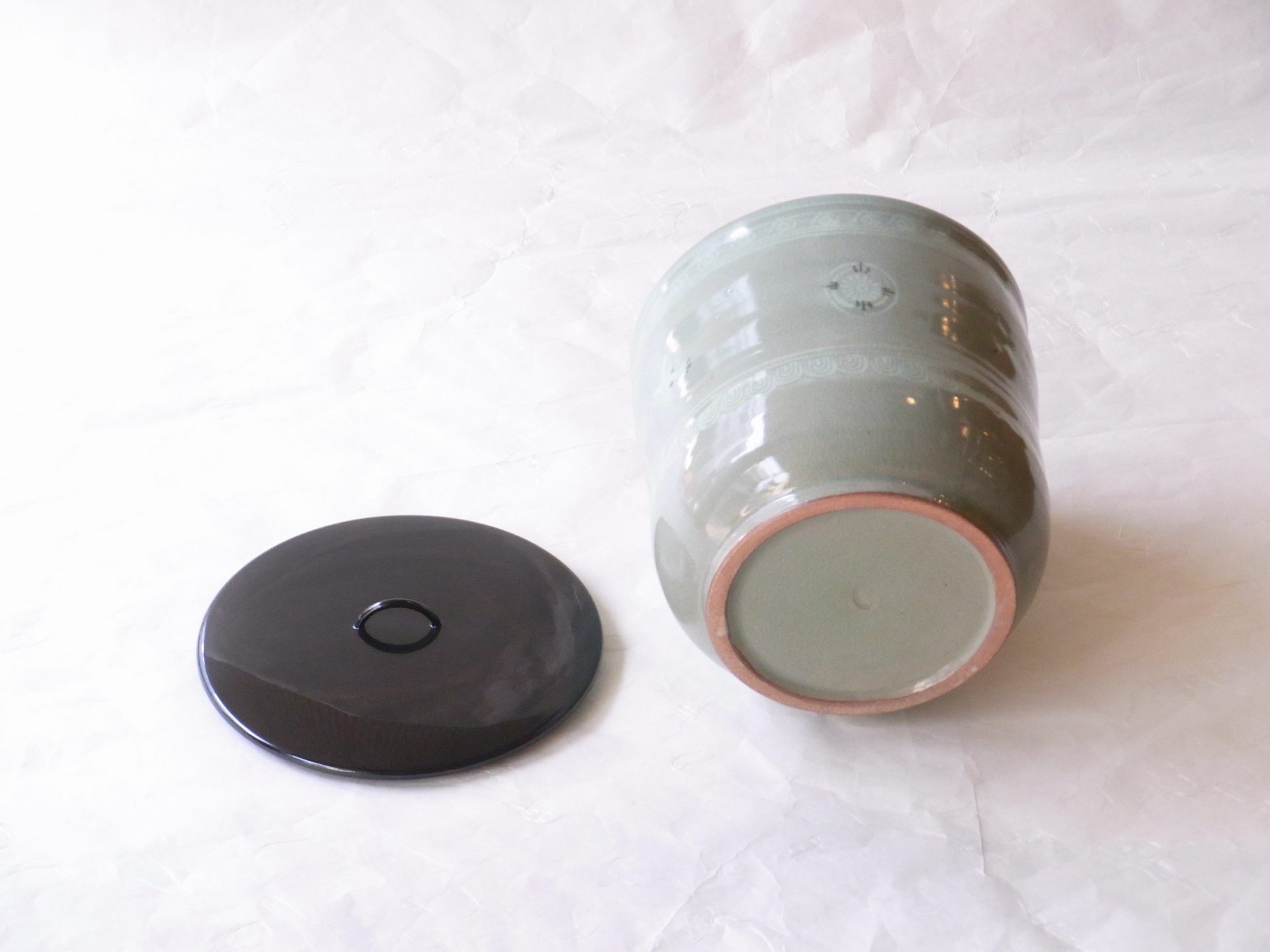
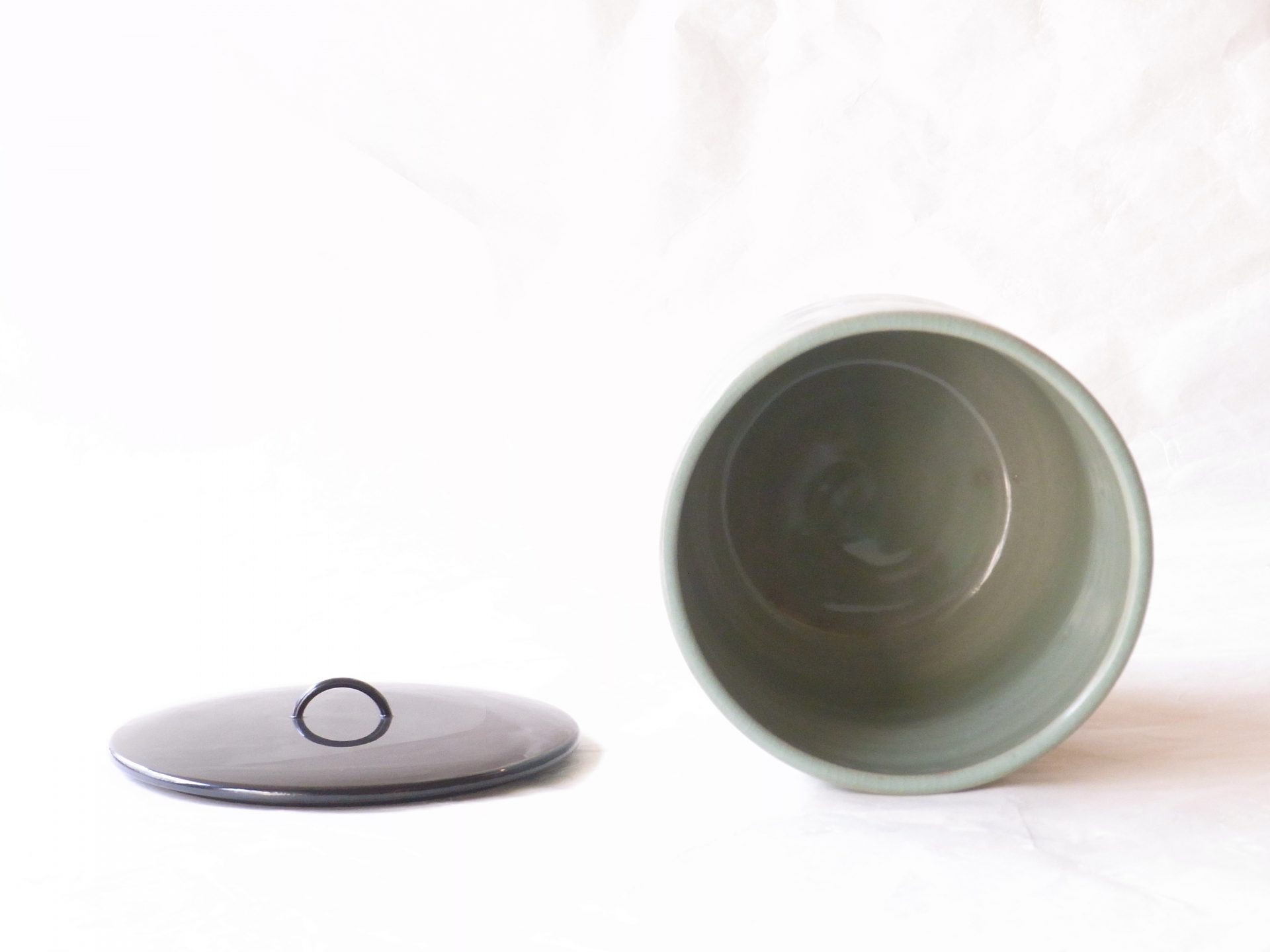
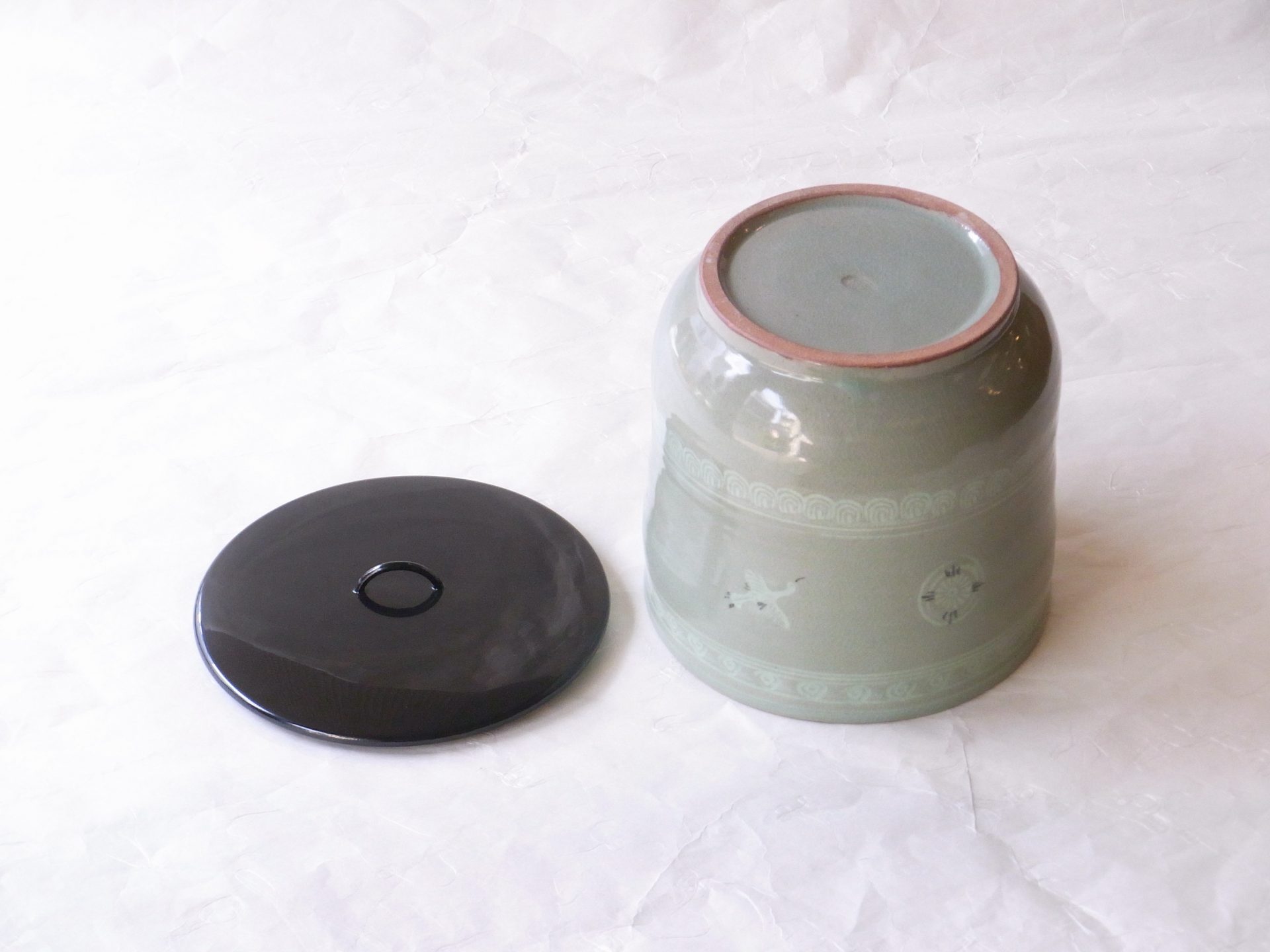
与平 作の青瓷雲鶴の水指のご紹介です。
この雲鶴手というのは、元々は高麗青瓷の一種で
雲鶴紋や狂言袴(きょうげんばかま)などの象嵌(ぞうがん)文様がみられます。
象嵌とは、素地に文様を彫ったり、押印の文様を付けて、その溝の中に
異色の泥を摺り込んで、上から釉薬を掛けて焼き上げる技法です。
雲鶴は文字通り、雲と鶴の模様ですが、狂言袴(きょうげんばかま)とは
この水指にも見られるように、丸紋で狂言師の袴にある文様によく似ていることから
この名前が付いたと言われています。
やや緑がかった釉薬で、細かい貫入が全体に見られ、高麗青瓷の
やや濁った青瓷釉が茶の湯によく合ったといわれています。
明る過ぎない、高麗時代を想わせる、落ち着いたやさしい色合いは
他と合わせやすいので今でもファンが多く、日本で作り続けられています。
径 15.8㎝ 高さ 17㎝
By Yohei
Celadon “Clouds and Cranes” Water Jar (Mizusashi)
We are pleased to introduce this celadon mizusashi with a “Clouds and Cranes” motif by Yohei.
The unkakute (cloud-and-crane) style originally derives from a type of Korai celadon. It features inlaid (zōgan) designs such as cloud-and-crane motifs and patterns known as kyōgen-bakama.
Zōgan (inlay) is a technique in which designs are carved or stamped into the clay body, then filled with clay of a contrasting color. A glaze is applied over the surface, and the piece is fired to complete the decoration.
“Clouds and cranes” refers literally to motifs of clouds and cranes. The term kyōgen-bakama, as seen on this water jar, is said to originate from the resemblance of the circular motifs to the patterns found on the hakama worn by kyōgen performers.
The glaze has a slightly greenish tone, with fine crackle (kannyū) visible throughout. It is said that the gently clouded celadon glaze of Goryeo ware harmonized particularly well with the aesthetics of the tea ceremony.
The subdued, gentle coloring—neither too bright nor showy—evokes the Goryeo period and is easy to combine with other tea utensils. For this reason, it continues to be favored by many and is still produced in Japan today.
Dimensions:
Diameter: 15.8 cm
Height: 17 cm
与平 作 青瓷云鹤 水指
这是与平制作的青瓷云鹤水指的介绍。
所谓“云鹤手”,原本是高丽青瓷的一种样式,常可见到云鹤纹样以及“狂言袴(きょうげんばかま)”等象嵌纹饰。
象嵌,是指在素胎上刻划或压印纹样,再将不同颜色的泥料填入刻痕或凹槽之中,随后施釉并烧成的一种装饰技法。
“云鹤”顾名思义,即云与鹤的纹样;而“狂言袴(きょうげんばかま)”,正如在这件水指上所见,是一种圆形纹样,因其与狂言演员所穿袴上的图案十分相似,故得此名。
釉色略带青绿色,整体可见细密的贯入纹,高丽青瓷那种略显浑厚、含蓄的青瓷釉色,被认为与茶之汤的审美情趣十分契合。
这种不过分明亮、令人联想到高丽时代的沉稳而柔和的色调,易于与其他茶道具相搭配,至今仍深受喜爱,并持续在日本制作。
尺寸:
直径 15.8厘米
高度 17厘米